Different Types of Badminton Shuttlecocks Explained: Plastic, Hybrid and Feathers
Choosing the right badminton shuttlecock can completely change how the game feels. A plastic shuttle may last for several sessions, while a feather shuttle can feel faster, sharper and more precise but may need replacing much sooner. Hybrid shuttlecocks sit somewhere in the middle, giving developing players a useful bridge between durability and more authentic feather-style flight.
This guide explains the main types of badminton shuttlecocks, how they differ, who they suit best, and what to look for before buying. These are the current brands that we stock: Yonex, Ashaway (Dmantis), Babolat and Li-Ning.
What Is a Badminton Shuttlecock?
A badminton shuttlecock is the projectile used in the game, designed with a weighted base and an open skirt or feather cone. This shape creates high drag, meaning the shuttle slows down rapidly after being hit.
That is why badminton rallies can include extremely fast smashes, delicate net shots and steep drops within the same point.
Under badminton laws, a shuttle may be made from natural and/or synthetic materials, but its flight should be broadly similar to a traditional feather shuttle with a cork base.
Feather shuttles traditionally use 16 feathers, while non-feathered shuttles replace the feather cone with a synthetic skirt. Regulation shuttles weigh between 4.74g and 5.50g.
The Three Main Types of Badminton Shuttlecocks
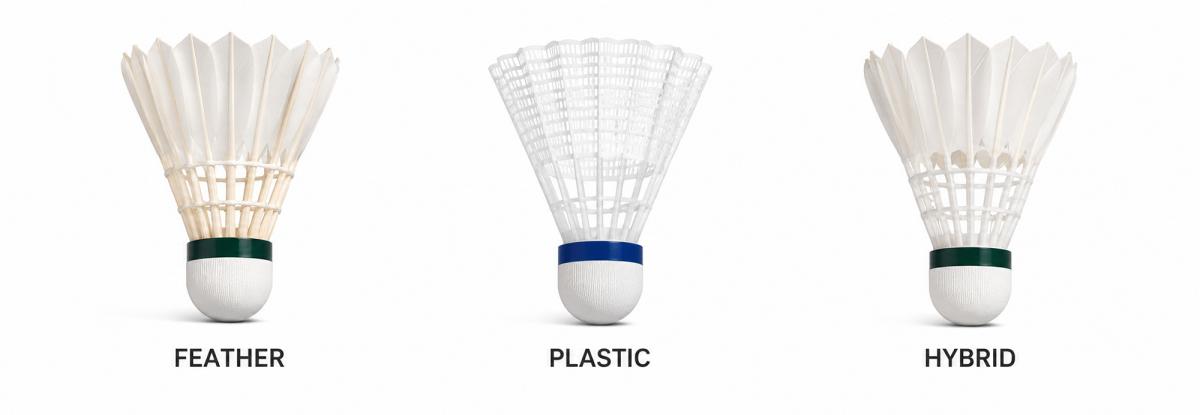
The most common shuttlecock categories are:
- Plastic or nylon shuttlecocks
- Hybrid shuttlecocks
- Feather shuttlecocks
Each type has its own strengths. The best option depends on your playing level, budget, playing frequency and whether you are training, playing socially or competing.
Shop all Badminton Shuttlecocks >
Feather Shuttlecocks: The Choice for Performance and Competition
Feather shuttlecocks are the traditional choice for competitive badminton. They are usually made with goose or duck feathers fixed into a cork base. They offer the most responsive flight, the sharpest feel and the best control for advanced shot-making.
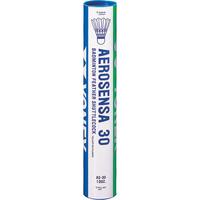
Feather shuttles are commonly used in leagues, tournaments and serious club play because they respond better to touch, spin, slice and changes of pace. Yonex feathered shuttlecocks as the option for competitions and top-level players, highlighting their trajectory and stability.
Benefits of feather shuttlecocks
Feather shuttles give players the most accurate badminton experience. They tend to come off the strings cleanly, slow down naturally and drop more steeply, which helps with advanced tactical play.
Their main benefits include:
- Best flight quality
- Superior touch and feel
- More precise control
- Preferred for competitive play
- Better response for slices, net shots and deceptive strokes
For players working on advanced technique, feather shuttles make a noticeable difference because they respond more clearly to racket angle and timing.
Potential drawbacks of feather shuttlecocks
The biggest downside is durability. Feather shuttles can break, bend or lose their shape quickly, especially during powerful hitting or when players make frequent off-centre contact. This makes them more expensive over time.
They can also be affected by storage conditions. Dry feathers may become brittle, while poor storage can reduce consistency and lifespan.
Best for
Feather shuttlecocks are best for advanced players, league matches, tournaments, serious club sessions and technical training where realistic flight and feel matter most.
Plastic Shuttlecocks: Durable and Beginner-Friendly
Plastic shuttlecocks, often called nylon shuttlecocks, are the most durable and forgiving option. Instead of individual feathers, they use a synthetic skirt attached to a base, usually cork or synthetic material.
These are a popular choice for schools, leisure centres, beginners and casual club sessions because they can survive repeated mishits far better than feather shuttles. Nylon shuttlecocks are commonly used by recreational, beginner and school players, noting that they are stronger and more durable than feather shuttles, although they generally offer less spin and slower play.
Benefits of plastic shuttlecocks
Plastic shuttles are ideal for players who want value and consistency over maximum feel. They are particularly useful when learning basic serves, clears and rallies because they do not break as easily when struck off-centre.
Key advantages include the following:
- Excellent durability for regular practice
- Lower long-term cost compared with feather shuttles
- Good for beginners still developing clean contact
- Less waste during casual sessions
- Available in different speeds, such as slow, medium and fast
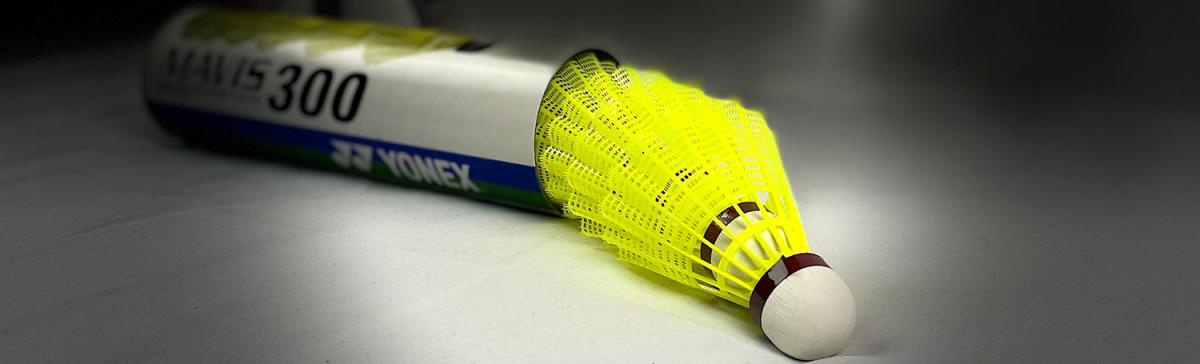
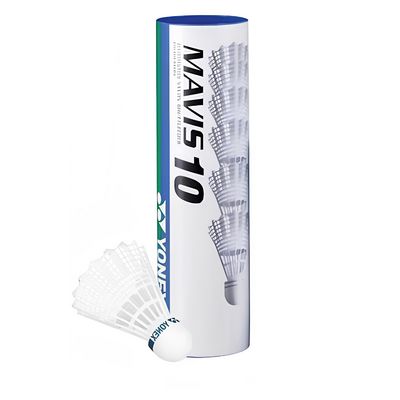
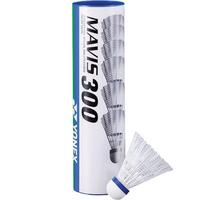
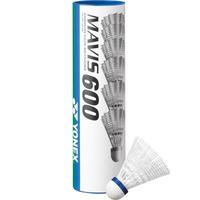
The Yonex MAVIS nylon shuttlecock series is positioned as a club-level option offering close-to-feather flight and up to five times more durability than typical nylon shuttlecocks. Yonex also notes that speed choice is affected by temperature and air density, with slower shuttles suited to warmer conditions and faster shuttles suited to colder, denser air.
Potential drawbacks of plastic shuttlecocks
The main trade-off is feel. Plastic shuttles tend not to respond quite like feathers on touch shots, slices, tight net play or steep attacking shots. For beginners this may not matter much, but improving players may eventually notice that plastic shuttles do not reward fine racket control in the same way.
They can also feel slightly heavier or less crisp off the strings, especially during faster rallies.
Best for
Plastic shuttlecocks are best for beginners, schools, junior sessions, casual doubles, garden badminton and high-volume practice where durability matters more than competition-level flight.
Hybrid Shuttlecocks: The Middle Ground
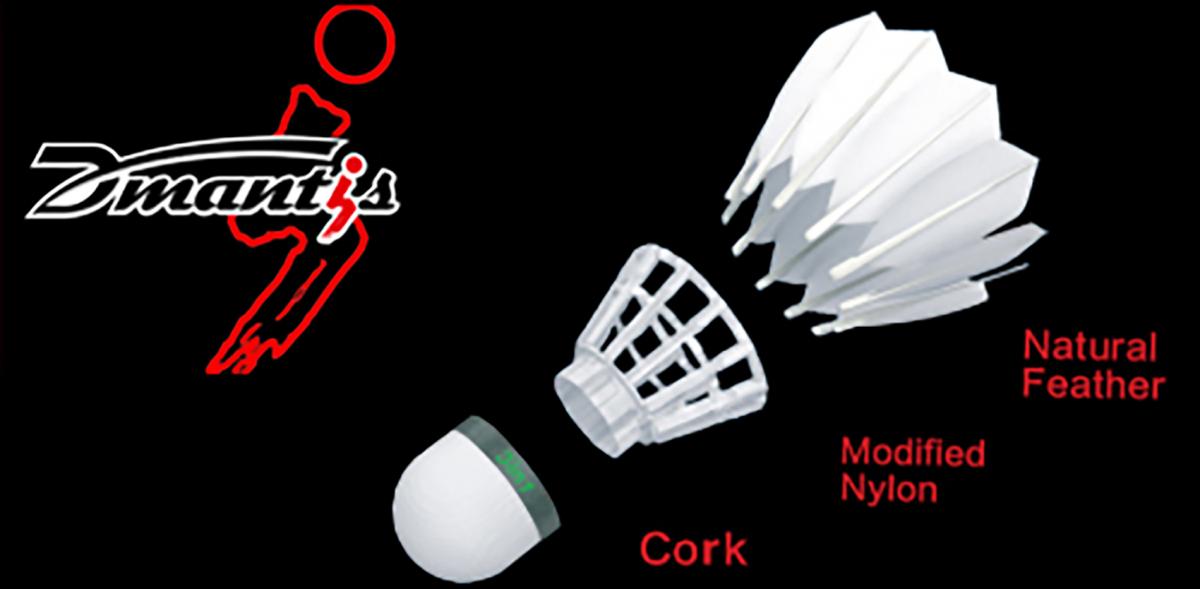
Hybrid shuttlecocks are designed to combine elements of plastic and feather shuttles. They usually feature a cork base, synthetic nylon structure and natural feathers inserted into the synthetic section.
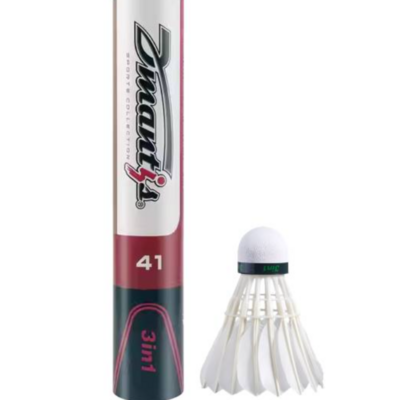
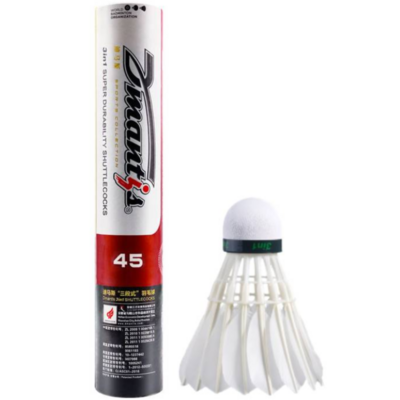
Ashaway Dmantis D45 Hybrid Shuttlecocks are crafted with a nylon cage and fibre cork base; the D45 combines the best of both worlds: the smooth, precise flight of traditional feather shuttlecocks and the resilience of a high-quality nylon shuttle. Their aerodynamic design ensures controlled flight and accuracy, allowing players to place shots with confidence.
Why choose hybrid shuttlecocks?
Hybrid shuttles are useful for players moving from plastic to feather. They offer a more feather-like experience without the same level of fragility or cost. For many intermediate club players, this makes them a practical compromise.
They are particularly useful when players want:
- More realistic flight than plastic
- Better feel for net shots and drop shots
- Improved durability compared with full feather shuttles
- A more affordable stepping stone before regular feather play
Dmantis describes hybrid shuttlecocks as an intermediate option between feather and nylon, made from natural feathers and synthetic materials, and suitable for beginners to intermediate players transitioning towards feather shuttlecocks.
Potential drawbacks of hybrid shuttlecocks
Hybrid shuttles are not quite as durable as full nylon shuttles, and they may not feel as refined as premium feather shuttles. They are a compromise, so advanced players may still prefer a full-feather shuttle for match play, while beginners may prefer the lower cost per session of plastic.
Best for
Hybrid shuttlecocks are best for improving beginners, intermediate players, club nights, training sessions and players who want a more authentic badminton feel without moving straight to full feather shuttles.
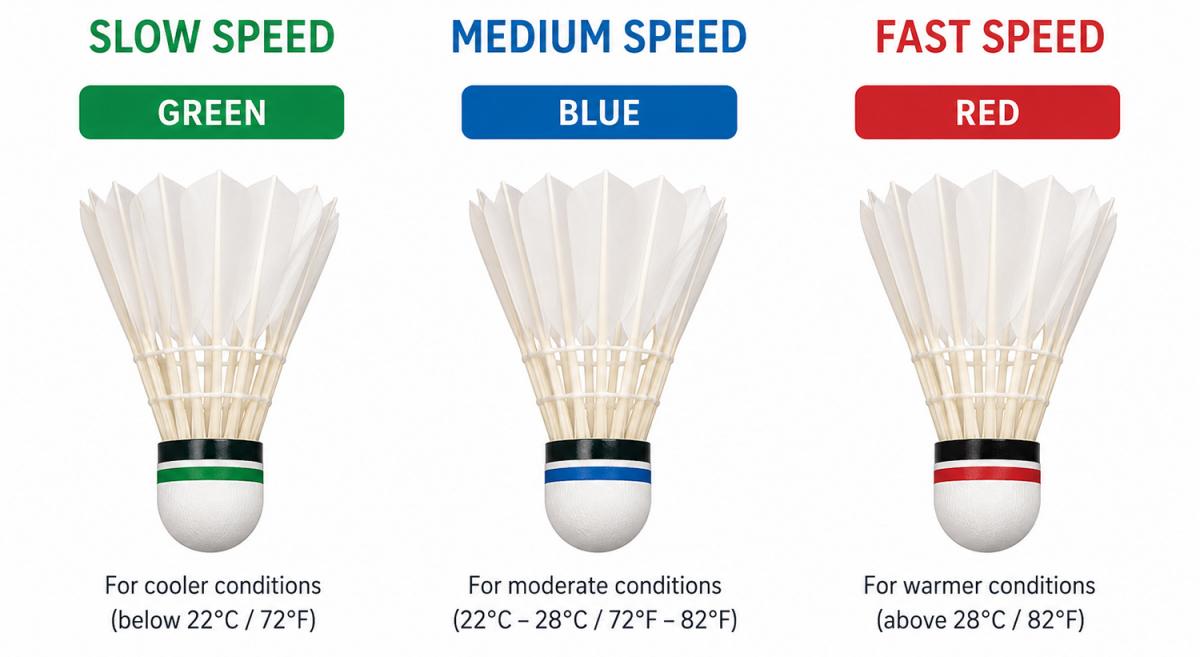
Shuttlecocks are also available in different speeds. This matters because temperature, humidity and air density can affect how far and fast a shuttle travels.
Many feather shuttles use numbered speeds, commonly around 75 to 79 depending on the brand and market. Some plastic shuttles use simpler categories such as slow, medium and fast. Babolat's shuttlecock range, for example, lists both numbered feather/hybrid speeds and slow/medium/fast synthetic speed options.
As a general guide:
- Slower shuttles are better in warmer conditions
- Medium speed is often the safest choice for general indoor club play
- Faster shuttles are better in colder conditions
Yonex similarly notes that slower shuttlecocks suit warmer, less dense air, while faster shuttlecocks suit colder, denser air.
Final Verdict: Plastic, Hybrid or Feather?
There is no single "best" shuttlecock for every player. The right choice depends on how you play, how often you play and what you want from the session.
If you are playing socially or learning the game, choose plastic shuttlecocks. If you want a more authentic feel without the full cost and fragility of feathers, choose hybrid shuttlecocks. If you are playing competitively or want the most precise badminton experience, choose feather shuttlecocks.
A good approach is to keep more than one type in your bag: plastics for warm-ups and casual drills, hybrids for improving sessions, and feathers for match play.